Office Hours: Monday - Sunday: Open 24 Hours


Four out of five people in care homes live with dementia. A space designed with care can ease confusion, prevent falls and bring genuine comfort. The way dementia care community in Nichols Hills arranges their spaces, chooses their colors and structures their days directly affects how your loved one feels, behaves and connects with others.
The space where your loved one lives shapes every moment of their day. When families understand how physical environments affect dementia care, they can make choices that genuinely improve their loved one’s comfort and well-being.
This guide will help you distinguish between communities that truly create healing spaces and those that simply provide basic services. You’ll learn what to look for and what questions to ask, so you can find a place where your loved one can experience peace, dignity and the best possible quality of life.
What Type Of Living Environment Is Most Beneficial For Someone With Dementia?
Understanding what your loved one needs starts with recognizing how dementia reshapes their relationship with their surroundings. The most beneficial living environment for someone with dementia is one that matches their current abilities, reduces overwhelming stimuli and creates a sense of calm through thoughtful, homelike design. Research confirms that environmental factors directly influence behavior, mood and overall well-being in people with dementia—making your choice of living space one of the most important decisions you’ll make. (Healthcare (Basel), 2018)
When dementia affects your loved one, their brain processes the world differently. They become more connected to what’s happening right now, which means their immediate surroundings hold tremendous power over how they feel each day.
Creating calm through thoughtful design
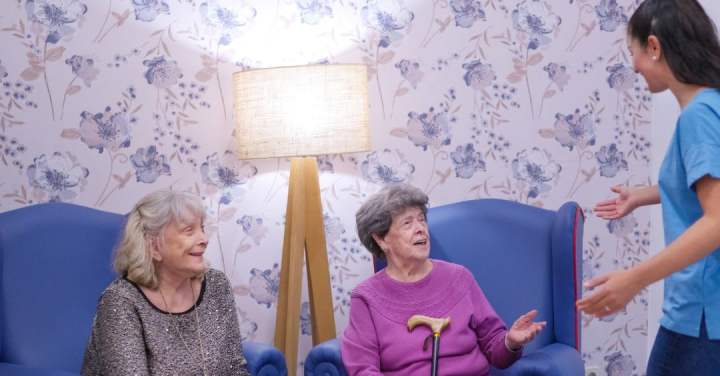
The right environment can genuinely improve wellbeing and independence. Spaces designed with care reduce anxiety, aggressive episodes and falls. At Iris Memory Care, you’ll find:
- Natural lighting and outdoor spaces that reduce depression and improve daily interactions
- Homelike furnishings that create familiarity and reduce distress
- Thoughtfully designed common areas that encourage connection without overwhelming
Why small-scale environments matter
Smaller living spaces consistently show better outcomes than large institutional settings. When your loved one lives in a more intimate environment, they experience:
- Less aggression and agitation
- Better cognitive function
- More meaningful social connections
- Greater independence in daily activities
The environment becomes supportive without side effects—improving quality of life through design rather than additional medications.
What Architectural Features Create Peaceful Dementia Care Communities?
At Iris Memory Care of Nichols Hills, thoughtful design creates an environment where your loved one can feel truly at home. Every element in our community works together to support comfort, independence and meaningful daily experiences for residents living with Alzheimer’s and dementia.
Outdoor spaces that invite connection
Our beautiful courtyards and comfortable walking paths offer more than fresh air—they provide gentle opportunities for exploration and engagement. These outdoor areas include:
- Winding paths that encourage well-being, purposeful movement
- Fragrant plantings that awaken the senses
- Comfortable seating areas for relaxation and conversation
- Gardening opportunities where residents can touch and tend to plants
These spaces allow your loved one to connect with nature while moving freely in a comfortable environment.
How Do Dementia Care Communities In Nichols Hills Implement These Principles?
At Iris Memory Care of Nichols Hills, we understand that choosing memory care for someone you love is one of the most important decisions you’ll ever make. Our home-like community offers specialized Alzheimer’s and dementia care in a warm, residential setting where your loved one can truly thrive. With round-the-clock support from trained caregivers and a thoughtfully designed environment, we create a place where comfort meets compassionate care.
A residential approach to memory care
Unlike traditional communities, Iris Memory Care embraces a residential model that makes all the difference. Our intimate, homelike environment is designed specifically for those living with Alzheimer’s and dementia.
- Centrally located common areas where residents can relax in familiar comfort while staff provides gentle supervision
- Higher staff-to-resident ratios ensure your loved one receives individualized attention every day
- Kitchen and dining spaces that encourage community connection and social engagement
- Comfortable living rooms and beautiful courtyards that feel like home, not an institution
Your family’s role in their journey
Your involvement brings immeasurable value to your loved one’s experience. We welcome you to be an active partner in their care.
- Regular visits that maintain meaningful connections
- Open communication with our care team about your loved one’s needs
- Opportunities to join for meals and activities
- Personal touches that matter—favorite furniture, cherished photographs and meaningful decorations that create comfort and reduce disorientation
Our caregivers are specially trained in person-centered approaches and dementia-specific communication, ensuring your loved one receives care that honors their dignity and individuality.
Creating Comfort Every Day
The environment you choose for your loved one shapes their daily reality more than any other single factor. Peaceful, healing spaces reduce anxiety, support cognitive function and enhance quality of life without medication. Reach out to Iris Memory Care of Nichols Hills at (405) 591-4434 to learn how their residential approach implements these evidence-based design principles, which make a measurable difference in dementia care outcomes.
FAQs
Q1. What type of living environment is most beneficial for someone with dementia? Smaller, residential-style environments with 5-15 residents typically produce the best outcomes. These intimate settings with homelike design, familiar furnishings and centrally located common areas help reduce confusion and agitation while promoting comfort and social interaction.
Q2. How does a sensory room help dementia patients? A sensory room, also called a multisensory environment, contains carefully selected objects designed to stimulate the five senses in a controlled, calming way. These spaces help keep residents engaged while reducing stress and anxiety associated with dementia. Calm sensory zones prevent overstimulation and provide therapeutic benefits that can improve mood and decrease agitation without medication.
Q3. Why is lighting so important in dementia care communities? Proper lighting directly impacts sleep patterns, mood and overall well-being in dementia patients. Circadian-effective lighting that mimics natural daylight cycles—with bright days and dark nights—can increase sleep time by over an hour and alleviate depression symptoms.